Coronavirus. Six months ago this word would have been written off as having no major significance, although it may have provoked slight amounts of curiosity. But now, as of May 2020, the entire country has been on mandatory lockdown at the will of that very word. It is hard to predict, or even prepare for, worldwide tragedies or pandemics, as we are not a perfect, psychic society. Our ignorance to the power of a pathogen, and the ultimate destruction it can do with no mercy or hesitation, has been one of the country’s biggest challenges in years. “We were naive and unprepared,”(Stengel), but from this society can learn, and a new sense of reality “can lead us to a smarter future,”(Stengel). The best point of view to have during a pandemic of this magnitude is optimism, for nothing will ever improve, not the economy, not societal interactions and opportunities, and not public health, unless action is taken with a positive, and hopeful mindset.
The first acknowledgement that must be made in order to begin rebuilding, is that the government must put the people and their livelihoods first. The effect COVID-19 has had on society is beyond all expectations, so change must be made on all levels of social, economic and environmental life to prevent a recurrence. The main concern at this time in the pandemic is what and how certain changes will be implemented, as “there are a number of possible futures, all dependent on how governments and society respond to coronavirus and its economic aftermath,”(Mair). The most obvious difference in life going forward is how social interactions, on all levels, will be handled. Regulations are almost guaranteed to emerge concerning the close contact of workers within businesses, students in schools, and even passengers on public transportation. Such regulations would, most likely (and hopefully), be welcomed by the public, who have experienced the wrath of their ignorance towards science and disease transport. During this pandemic, “Americans are being acquainted with germ theory and exponential growth,”(Trauss). Newfound knowledge regarding disease transmission and the seriousness surrounding it will reshape not only governmental decisions, but societal awareness, and therefore lead to a safer and more conscious world.
Prior to COVID-19, people lived with a sense of “ignorance is bliss” when it came to modifications necessary for the success of the nation. Life at the time seemed perfect (more or less), but “this is the luxury afforded us by peace, affluence, and high levels of consumer technology,”(Trauss) and it was bound to be broken eventually. As time passes and society evolves, social and economical advancements become more and more necessary to adapt to new circumstances, so in a way, “the coronavirus disruption simply accelerates the need to be creative and embrace new models,”(Loh). This pandemic has only opened our eyes to crucial reforms that must be made in order to avoid future devastations. Acceptance of such needs, along with quick and thoughtful action will save the country and help to guarantee the safety of society throughout future hardships. So, the biggest change that must be made as a result of coronavirus is not more restrictions in public settings, a more prepared economical model, or even a greater focus on online resources, it is simply an improved mindset. Learning from this pandemic is the most important thing we can do as a society, as it will lead us to each of the necessary implementations and adjustments to prevent another deadly complication.
As the world continues to be ravaged by an unseen, yet immensely powerful disease, society must realize the power of a forward thinking mindset. With positive and preventative measures, the future of America (and the world) can be saved. The most important thing during a time like this is to learn from our mistakes, and to ensure nothing of this magnitude will ever devastate the world again.
Works Cited
Loh, Tracey Hadden. “How COVID-19 Will Change the Nation’s Long-Term Economic Trends, According to Brookings Metro Scholars.” Brookings, Brookings, 14 Apr. 2020, www.brookings.edu/research/how-covid-19-will-change-the-nations-long-term-economic-trends-brookings-metro/.
Mair, Simon. “How Will Coronavirus Change the World?” BBC Future, BBC, 31 Mar. 2020, www.bbc.com/future/article/20200331-covid-19-how-will-the-coronavirus-change-the-world.
Stengel, Richard. “The Coronavirus Pandemic Can Lead Us to a Smarter Future.” Time, Time, 13 Apr. 2020, time.com/5819799/coronavirus-pandemic-smarter-future/.
Trauss, Sonja. “Coronavirus Will Change the World Permanently. Here’s How.” POLITICO, 19 Mar. 2020, www.politico.com/news/magazine/2020/03/19/coronavirus-effect-economy-life-society-analysis-covid-135579.
 English 110 Honors Spring 2020
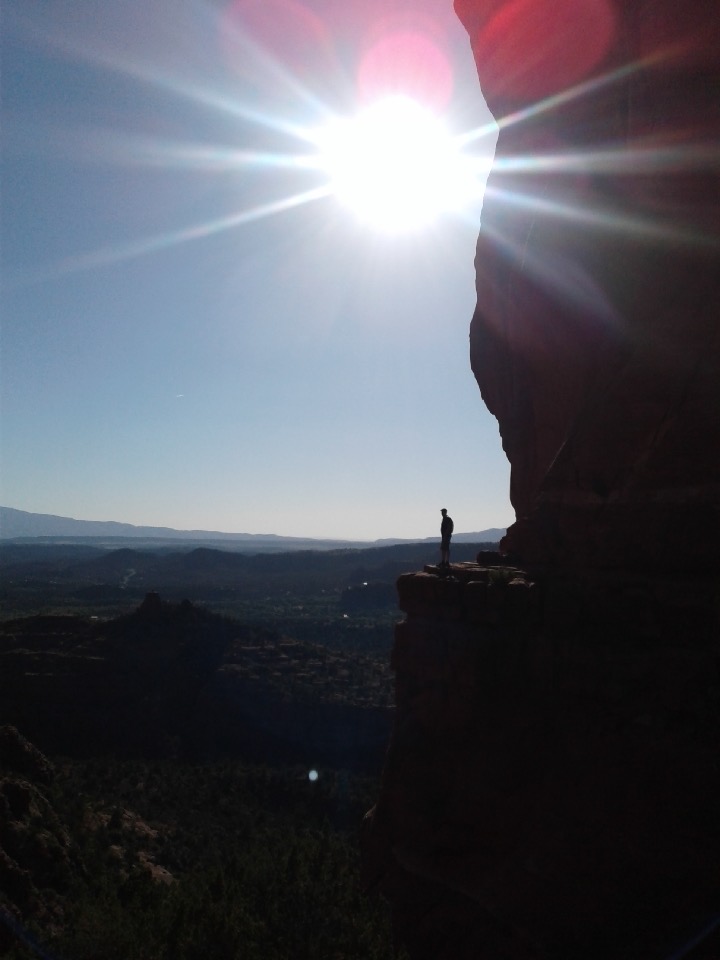
I agree that preparation is key to situations like these. Many countries, including our own, have struggled to respond to the COVID-19 pandemic because there was no procedure to follow. Governments have had to react to events as they happened, which is less than ideal. Moving forward, I agree that the government will likely develop regulations for social settings, and I can guarantee that they will come up with procedures to follow in the event of future pandemics or other disasters. Great post, and I really like the photo you submitted as well.
-Nick Whaley
LikeLike
First of all, I really like your photo. I think it perfectly encapsulates the sentiment that we are all tiny creatures at the whim of the world, something we have all been reminded of by this pandemic. I really like how the basis of your post is centered around hope. For example you cite “a positive, and hopeful mindset” as the most important thing to have moving forward. Though these have been trying times, I agree that many people are becoming a lot more educated and self aware about how exponentially growing viruses and transmission works. As we continue to learn and grow we can only hope that we can come out of this into a “safer and more conscious world.” I also think it is very important how you comment on the fact that we live in a very ignorant and affluent society which has ignored major issues for so long. Now that we are forced to face all these faults face-on, a change in mindset is necessary for recovery. Your conclusion paragraph is written very powerfully and leaves the reader with hope that we can change for the better “to ensure nothing of this magnitude will ever devastate the world again. ” Great writing , I hope the end of the semester is going well!
Cally Carmello
LikeLike
The first few lines of your post were powerful and enticing. I really liked the phrase you wrote, “Our ignorance to the power of a pathogen”. I read that over and over again because I thought it was so smooth and clever. The past few months have shown our society is truly ignorant to the power of a pathogen as many people did not believe the corona virus was a threat until it was. I thought the way you incorporated quotes within your sentences made the post read smoothly and they added important background for your writing. The post was strong throughout and the conclusion really hit it home. The line, “As the world continues to be ravaged by an unseen, yet immensely powerful disease” sparks great imagery in the reader’s mind and the word “ravaged” was a good choice to use. Your post was written very well and it was a pleasure to read, good job!
LikeLike