
Since the start of COVID-19 we have seen drastic changes in the way the world operates. Travel has been halted, factories are closed, and people are working from home. All of these things have one important factor in common: they are harmful to the environment. While COVID-19 has had disastrous and horrifying impacts, when it comes to the state of our planet, beautiful things are happening.
Peter DeCarlo, an Associate Professor of Environmental Health Engineering at Johns Hopkins University, stated to Newsweek magazine that “Air pollution levels as observed by satellite are showing drastic improvements in many areas that have been undergoing restrictive quarantines due to COVID-19,”(Georgiou, 2020). Parts of the world that have been severely effected by the pandemic are showing incredible improvements to their air quality. China, a country that typically suffers from poor air quality, has seen reductions in NO2 in their atmosphere by as much as 50-60% in some cities (Georgiou, 2020). Peter DeCarlo also notes that “This isn’t surprising given that vehicles and industry are the main source of NO2 and when these sources are essentially turned off, the atmosphere will clear up relatively quickly,”(Georgiou, 2020).
However, there are two sides to every coin. “Medical masks and gloves are washing up on beaches in Hong Kong because of improper disposal and policy makers have put environmental policies and climate summits on hold to focus on the coronavirus crisis at hand.” (Nixdorf, 2020). Now that sounds more like the planet we have come to know, and unfortunately the way we will likely live after COVID-19.
When the stay-at-home orders are over and travel bans are lifted, people will go on about their lives as before and the incredibly rapid progress the earth has made in such a short break from our pollutants will be forgotten. We will go back to worrying more about the bottom line than the collapse of our home. We will continue to drive to work everyday when some have found that working from home could be just as efficient. We will continue to fly around the world for business meetings that could be had over a laptop. We will continue to run our industries on fossil fuels and we won’t grow from our experience.
In fact, we may take a step backwards. Christopher Jones, the director of UC Berkeley’s CoolClimate Network research project posed the question “Are we going to be investing in those clean energy, low carbon technologies, or is this going to kind of sidetrack us from making those investments?” to Business Insider Today (Nixdorf, 2020). Sadly, he is probably right in assuming that rather than learn from what we have seen in the pandemic, investors will likely be tighter with their money.
What we should do moving forward is recognize how much has changed in such a short time, and how much we are capable of changing over a longer time frame. In Wuhan, China, citizens are celebrating “the return of blue skies to the usually smog-laden city” after less than three months of extremely decreased pollution (Funnell, 2020). In fact, a Stanford University professor, Marshal Burke, has found that this decrease of pollution in China “…likely has saved the lives of 4,000 kids under 5 and 73,000 adults over 70 in China,” (Funnell, 2020). Imagine the world we could create if we even somewhat decreased our pollution over a much longer time frame.
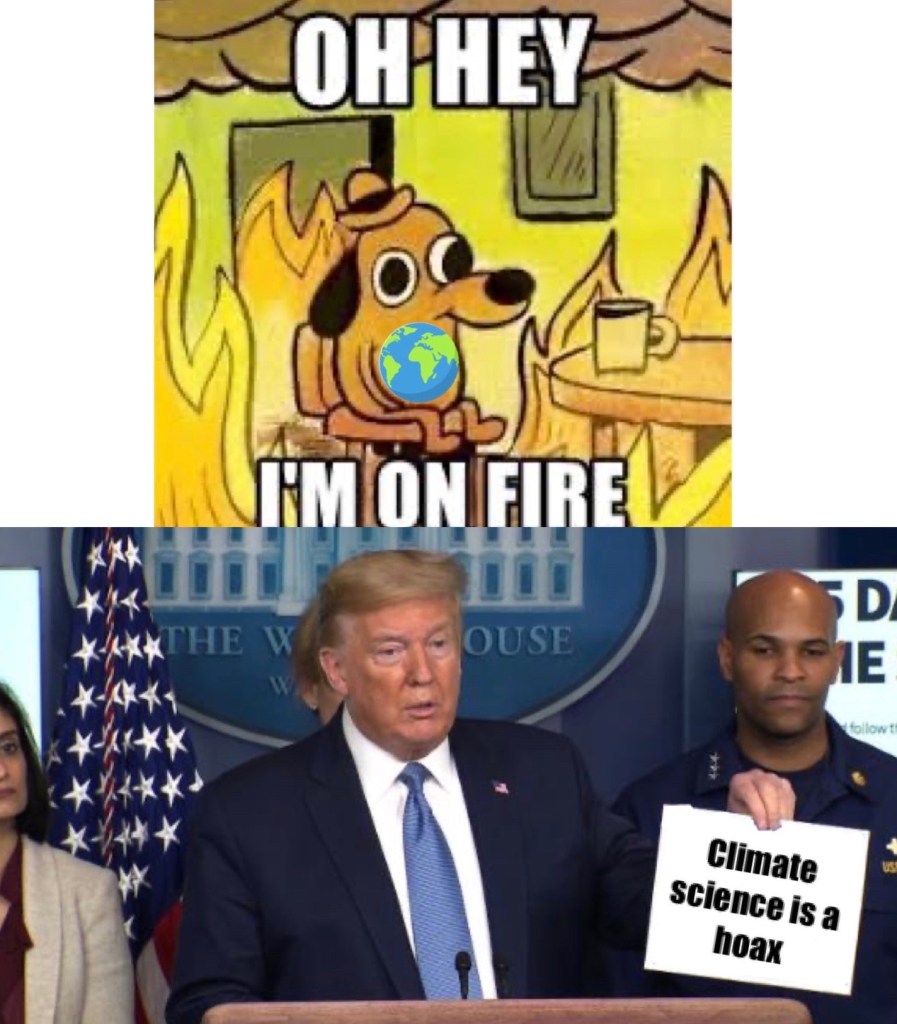
These are the lessons we should be living with in the future, but quite frankly I do not think these lessons will be enough, or at least not in our own country. “In an unprecedented move, the Environmental Protection Agency announced an indefinite suspension of enforcing environmental regulations until the crisis passes.” is a sentence that is sadly unsurprising to hear under our current administration (Rector, 2020). This policy begs the question, what does deregulating the environment have to do with the COVID-19 crisis? The simple answer is absolutely nothing, which further confirms that even after what we have seen in this pandemic, nothing will change. In fact, it seems the Trump administration has found a way to use the pandemic in their anti-environmental favor. I hope the earth enjoyed its break from smog filled skies and polluted waterways, because it won’t last long.
-Danielle Hoban
Works Cited
Funnell, R. (2020, March 23). The Unexpected Impact Of A Pandemic On The Environment. Retrieved from https://www.iflscience.com/environment/the-unexpected-impact-of-a-pandemic-on-the-environment-/
Georgiou, A. (2020, March 24). Coronavirus is having a major impact on the environment, with reduced CO2, better air quality and animals roaming city streets. Retrieved from https://www.newsweek.com/coronavirus-major-impact-environment-co2-air-quality-animals-1493812
Nixdorf, W. S. (2020, April 17). The coronavirus is giving the environment a break – but experts think it’s unlikely to stay that way. Retrieved from https://www.businessinsider.com/coronavirus-environment-impact-pollution-climate-quarantine-2020-4
Rector, T. (2020, April 22). Opinion: If we can mobilize against COVID-19, we can for climate change too. Retrieved from https://crosscut.com/2020/04/if-we-can-mobilize-against-covid-19-we-can-climate-change-too
 English 110 Honors Spring 2020
Reading your post I was shaking my head in agreement the entire time. These short-term effects that are allowing the Earth to literally breathe should be a Kickstarter to an environmental revolution that should have been undertaken decades ago. I wish people would place the same urgency that has been instituted world-wide in saving humans upon saving the planet itself. I also think that your images fit quite well with your post, as global leaders have a very large impact on what does and does not get accomplished, and sadly with our current leader of the free world, not much environmentally will be accomplished. Very insightful post.
-Adam Bonar
LikeLike
This topic is something that is very important to me, and always has been even before COVID-19, so I appreciate you focusing on it for this piece. At times, we get too caught up in our own lives to realize that the Earth is our home, it gives everything only to be disgraced by the people living on its surface. It has been amazing to see all of the improvements in relation to the environment during such a negative crisis in all other aspects. This, however, is also disheartening, as you stated perfectly in your piece. When talking about what is to come after the COVID-19 restrictions end, you stated “now that sounds more like the planet we have come to know,” and you couldn’t have said it much better. Yes the current way of living is improving the state of our environment, but the lack of caring in general and even the leading society, holds the unavoidable fate of the Earth. I hope the short term improvements serve as a wake up call for our lawmakers rather than go unnoticed. Thank you for your post.
Bray Fedele
LikeLike
I really like how you chose a different side of this topic. I constantly see things about how the environment has improved, but not very much about how to keep it this way. The line “When the stay-at-home orders are over and travel bans are lifted, people will go on about their lives as before and the incredibly rapid progress the earth has made in such a short break from our pollutants will be forgotten” is so true. I am afraid that we haven’t learned from this and that these are just short term changes. Everything you said in your post was true, and I agree that, sadly, the lessons we have learned will not be enough.
-Katie
LikeLike