
The world we live in is fast. In my opinion, too fast. The work never ends, the bills keep coming, deadlines quitely keep approaching, and before anyone has a moment to look, time stealthily slips away. Society has successfully defined success as the ability to gain more resources, more money, and more accomplishments. Soon enough, one accomplishment does not become enough, and quickly, the world becomes addicted to an unhealthy, selfishly driven, fast-paced lifestyle. A nine-to-five Monday work day echoes with “I hate Mondays” and each Friday is filled with “Thank God it’s the weekend.” If life is an endless cycle of miserable Mondays and long weeks waiting for two days of supposed calmness, is the world truly experiencing life in the right way?
The COVID-19 pandemic has slowed down the way a large part of the world lives their life, at least for now. Emily Bogle focused on the positive change that COVID-19 has had in bringing families together in her article “Families Adjust to Life at Home During Coronavirus,” where she details the photos of families taken by photographer Hannah Yoon. Bogle describes how Yoon was able to capture families from different backgrounds and socioeconomic statuses, all with the common theme of unity. Bogle states that “Yoon documented families with infants and families with teenagers, and she heard from single parents and two-parent households. Many parents spoke about how grateful they were to have this family time together, despite the uncertain circumstances” (Bogle, 2020). The fast-paced lifestyle dominating the world caused many parents to miss out on valuable time with their children and families to slowly grow apart, often without even knowing. With the pandemic providing time and opportunity to rejoin and connect, society should aim to take this practice forward. While this aspect is great, what is most important is that the virus is slowly chipping away at what the world views as a priority. Moving forward from the pandemic, society should aim to reevaluate what is truly important in life. Do we follow the lead of investment bankers on Wall Street by ordering Ubers for employees because they’re so overworked they can’t drive home? Do we keep crossing off days on our calendar, one by one, until we realize that the entire year is almost over in the blink of an eye? In her article “Society’s self-destructive addiction to faster living,” Dr. Stephanie Brown delves into the effects that an overworked and fast-paced lifestyle can have. Dr. Brown details that there has been “an alarming increase in stress-related disorders of all kinds for all ages” (Brown, 2014). With stay-at-home orders providing one of the first real breaks people have had in a long time, society should take this notion into the new life that will emerge after the pandemic. When people actually slow down and prioritize their mental health and emotional wellbeing, physical health improves as well. Understanding the value of time is critical, and this is an opportunity to do so.
With more time for self-reflection and a detailed look into some of the harsh realities of the world, I hope that people and our collective society are able to realize that constantly working for more shouldn’t always be the top priority. I am lucky to be quarantined in my own room, mindlessly scrolling through social media apps, all without worrying about my next meal. However, as Bethan McKernan outlines in her article, “‘After war we now have this’: Syrians grapple with poverty and coronavirus,” lots of people have it far worse. McKernan discusses the current coronavirus situation in war-torn Syria and states that “83% of people across both government and rebel parts of the country were already living in poverty” (McKernan, 2020). While news coverage of the pandemic in developing countries and low-income communities in America is still lacking, more people are learning about how the pandemic is disproportionately affecting populations living in poverty. COVID-19 is continuing to ravage communities that are already struggling, but this should serve as a sign to those more fortunate to reflect on what we already do have and to not negatively impact our health and wellbeing simply to have more, just as our existing way of living encourages. In fact, amidst the increasing stress and anxiety levels that the pandemic is causing, experts are actually recommending acts based on gratitude as a method of relief. In Jane Brody’s personal health article “Managing Coronavirus Fears,” she states that “You can bolster positive feelings by doing something good—for your neighbors, the essential workers in your community, or strangers now lacking adequate resources to care for themselves or their families” (Brody, 2020). While it is unfortunate that a global pandemic may be the cause for this shift, increasing anxiety about the virus may cause people to think about those less fortunate than them, and thus change the way society functions as a whole.
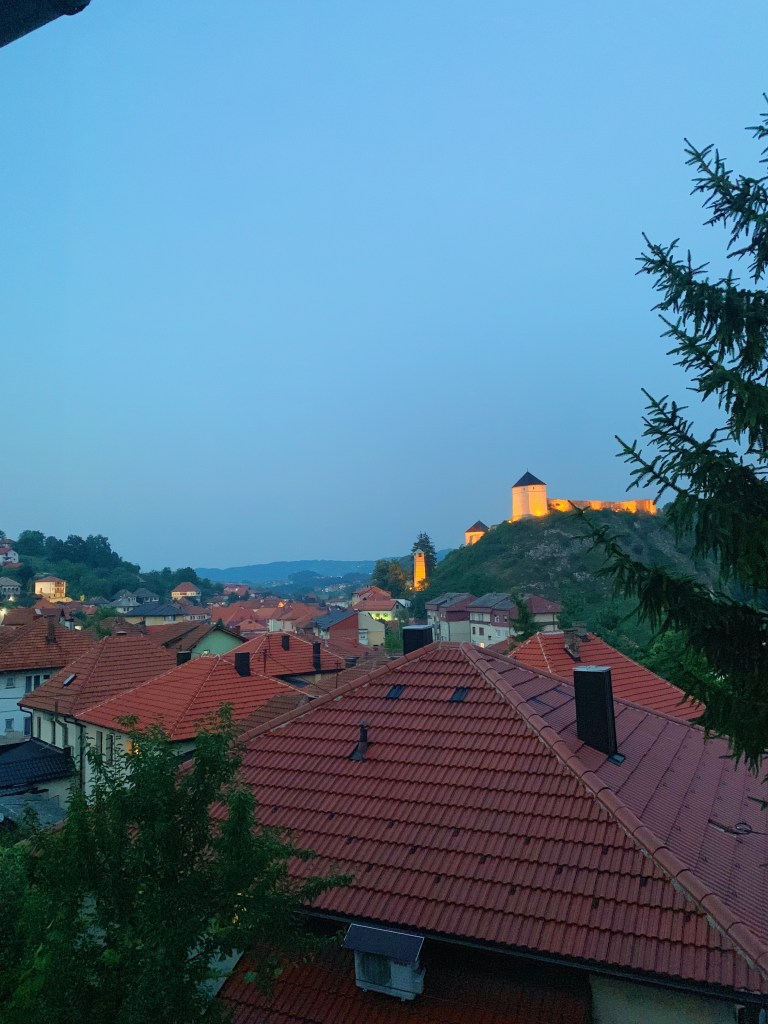
– Selma Cemerlic
Works Cited
Bogle, Emily. “Families Adjust To Life At Home During Coronavirus.” NPR, NPR, 15 Apr. 2020, http://www.npr.org/sections/pictureshow/2020/04/15/828835862/families-adjust-to-life-at-home-during-coronavirus.
Brody, Jane E. “Managing Coronavirus Fears.” The New York Times, The New York Times, 13 Apr. 2020, http://www.nytimes.com/2020/04/13/well/mind/coronavirus-fear-anxiety-health.html.
Brown, Stephanie. “Society’s Self-Destructive Addiction to Faster Living.” New York Post, New York Post, 5 Jan. 2014, nypost.com/2014/01/04/societys-addiction-to-faster-living-is-destroying-us-doctor/.
McKernan, Bethan. “’After War We Now Have This’: Syrians Grapple with Poverty and Coronavirus.” The Guardian, Guardian News and Media, 10 Apr. 2020, www.theguardian.com/world/2020/apr/10/after-war-now-have-this-syrians-grapple-poverty-coronavirus.
 English 110 Honors Spring 2020
Selma, I really loved your piece and your first paragraph resonated with me so much. I also think that life is often too fast paced. We get so caught up in making our lives busy and planning ahead that we often forget to cherish the moment that we are currently living in. Particularly, I liked this sentence: “. A nine-to-five Monday work day echoes with “I hate Mondays” and each Friday is filled with “Thank God it’s the weekend.”” This sentence probably resonates with many students and their parents. In times like this, at least for me, everyday feels the same and when the weekend comes, I barely notice the difference.
I love your approach to this prompt and LOVE your saying about how “society should aim to reevaluate what is truly important in life. ” I couldn’t agree more! I think now is the perfect time to live make this change.
Lastly, I love the caption on your photograph that you took. The caption and picture itself do a great job connecting to your piece and getting your main point across!
Great work!
~Caroline SanAngelo
LikeLike
I was drawn to your post due to its title, as for most posts I can usually guess at the topic, but for yours, I was left puzzled and intrigued. I am so glad I decided to read your piece because I find it absolutely amazing, it couldn’t be any more accurate. One of the aspects I appreciated the most in this piece is how you didn’t connect your topic to the coronavirus right away. Instead, you began by stating an obvious problem the has plagued our society, provided relatable background, and created a mutual understanding with the reader. The way you challenge society to look inwardly upon themselves and to propose a change is very powerful and undeniably important. Pandemics and other disasters cause humanity so much pain, but I appreciate the way you used one problem to point out another, and to beg the issue of change. You had so many phrases in this piece that made me stop and reflect, which shows the strength of your piece. Thank you for a great read.
Bray Fedele
LikeLike
I really enjoyed the first paragraph, in where you discussed the issues of fast-paced living in today’s society. I, personally, overlook the consequences of such and completely agree that the change of slowing down our lives can be seen as beneficial. I truly can connect to Bogle’s observation that families of all socioeconomic statuses are being connected; I love baking with my mom! I, too, wonder what life will be like when society emerges from this pandemic.
LikeLike
Selma, I really enjoyed reading your piece for multiple reasons. First of all, I think your points about slowing down our pace of living and thinking about those less fortunate than us are key lessons to take away from this pandemic and implement in our lives moving forward. Additionally, there were a few sentences in your post that really stood out to me, such as, “The work never ends, the bills keep coming, deadlines quietly keep approaching, and before anyone has a moment to look, time stealthily slips away,” and “Understanding the value of time is critical, and this is an opportunity to do so.” Both of these sentences are beautifully worded and perfectly capture your message. I also think they build nicely on some points you made earlier this semester about how the pace of life is slower in Europe, and how that results in mental and physical health benefits. Finally, the picture that accompanied your post is breath-taking, and I’m so happy you captioned it so that I could learn the backstory behind it! Thanks for a great read! -Renea
LikeLike