
Adam Bonar
In an ideal world, the end of this disastrous pandemic would allow us to revert our lives back to normalcy. We would be able to leave our homes freely, like imprisoned people finally being released from jail and reuniting with the ones we had to separate from for so long. Partly, that will hopefully be true. However, there will be many aspects of life that affect the global and local community.
I would define the end of the COVID-19 pandemic as the release and wide-spread distribution of a reliable vaccine and reach an effective proportion of herd immunity. Once accomplished, the global community must take a hard look at the situation and assess what should be done going forward, and how we can do better. Not only should there be a pandemic preparation team in place with policies set in place precautionarily, but people should, and will, become more wary of social actions that spread germs such as hand-shaking. Additionally, the climate crisis must have decisive action taken.
Currently, American hospitals are struggling not only due to filled capacities of hospitals, but also in accurately determining who has the virus and who doesn’t. This simply should not be happening in the richest country in the world who can easily fund wide-spread testing. According to a survey, the most commonly reported challenges “with the coronavirus centered on hospital efforts to confirm cases of COVID-19 and keeping staff safe while doing so” but struggle to combat the challenges due to “a COVID-19 testing shortage” (LaPointe, 2020). This is unacceptable, and is only one of the many short-falls of the federal government’s efforts to combat this pandemic. Leadership must take responsibility and reform the pandemic response team along with listening to experts’ advice for future crises such as this.
In addition to reacting in a decisive manner on a political and national scale, the average person should, and most likely will, see changes in their daily lifestyle. In the short-term, people will be eager to get back into the groove of their former lifestyles, as we have already seen with states beginning to open up states, “even against the advice of some health experts who say it risks dangerously spiking the number of cases,” with close-contact places opening such as “salons, barbershops, spas and pet groomers” (Maxouris and Hanna, 2020). In the longer-term however, I’d expect a balanced social awareness of certain interactions that were normally conducted before to be curbed, such as simple hand-shaking to cease. Even NIH National Institute of Allergy and Infectious Diseases Director, Dr. Anthony Fauci, says that he does not think “we should ever shake hands ever again… [as] it probably would decrease instances of influenza dramatically in this country” (Scipioni, 2020). This in addition to other interactions such as public transportation or air travel could very well see a stark decrease for years to come.
Lastly, and most certainly not least, the climate crisis must be curbed and resolved. There have been few silver linings from this pandemic in that aquatic ecosystems are clearing up along with the skies in normally smoggy areas, where “people are reporting seeing the Himalayas for the first time from where they live” (Gardiner, 2020). While certainly is nice to see, this should be a wake-up call to what needs to happen, as it should be apparent that humans have been fueling this climate crisis for decades now. While air pollution has decreased in some areas, where it is still apparent has been shown to enhance the effects of COVID-19. This is because that “fine particles [from pollution] penetrate deep into the body… [and] weaken the immune system and fuel inflammation in the lungs and respiratory tract, adding to the risk both of getting COVID-19 and of having severe symptoms” (Gardiner, 2020). This simply displays that facets of the climate crisis has the terrifying ability to slyly seep its way into any sort of problem we experience in addition to its already impactful face-value. This is exactly why this must be addressed quickly and decisively.
This pandemic has cast a shadow on the world, and is difficult to be hopeful. However, there is hope, and this will come to an end. But, our efforts to improve the lives of every person do not end with the eradication of this virus. We must be more prepared for future biological threats, be socially conscious of our human interactions, and shed much more light on the climate crisis at hand. Those are just some of the many ways we will be able to improve the lives of others in the short and long-term. To stop pressing forward and displaying compassion for others in the present and the future is to contribute to the loss of our innate humanity.
Works Cited
Gardiner, Beth. “Pollution Made COVID-19 Worse. Now, Lockdowns Are Clearing the Air.”
Pollution Made the Pandemic Worse, but Lockdowns Clean the Sky, National
Geographic, 20 Apr. 2020,
www.nationalgeographic.com/science/2020/04/pollution-made-the-pandemic-worse-but-
ockdowns-clean-the-sky/.
LaPointe, Jacqueline. “COVID-19 Testing Shortage Hinders Hospital Efforts to Combat Virus.”
RevCycleIntelligence, 7 Apr. 2020,
revcycleintelligence.com/news/covid-19-testing-shortage-hinders-hospital-efforts-to-co
Bat-virus.
Maxouris, Christina, and Jason Hanna. “Some States Begin to Reopen as US Closes in on 1
Million Coronavirus Cases.” CNN, Cable News Network, 26 Apr. 2020,
http://www.cnn.com/2020/04/25/health/us-coronavirus-saturday/index.html.
Scipioni, Jade. “White House Advisor Dr. Fauci Says Handshaking Needs to Stop Even When
Pandemic Ends-Other Experts Agree.” CNBC, CNBC, 9 Apr. 2020,
http://www.cnbc.com/2020/04/09/dr-anthony-fauci-handshaking-needs-to-stop-even-after-pandemic.html.
 English 110 Honors Spring 2020
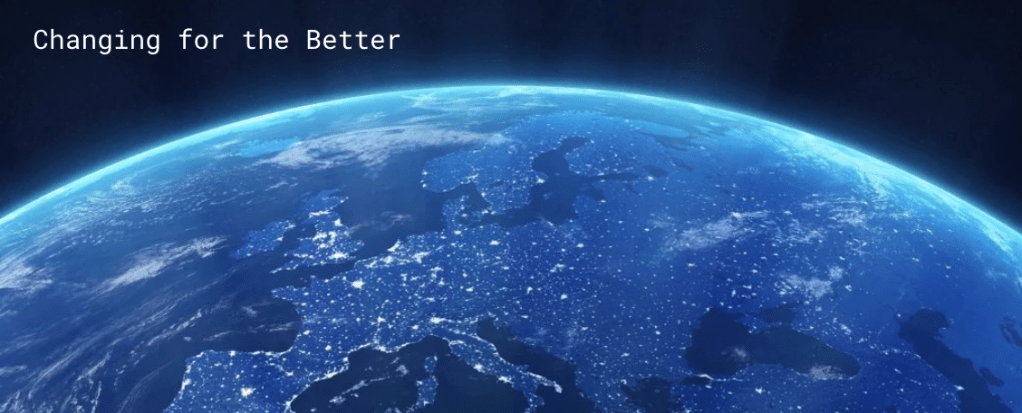
Seeing your beautiful picture of Earth from space was much needed after staring at my four bedroom walls for over a month straight. I think it’s hard to always remember how small we are compared to the scale of the planet and universe; however, this pandemic has proven to show that we are by no means indestructible despite what many may think. I like how you started your post with powerful imagery, comparing leaving self-isolation to “imprisoned people finally being released from jail.” I too dream of the virus being lifted and the flood gates being let open, but alas I know restrictions will be let off much more slowly. I also like how you approach this with the mindset of learning from our mistakes. I wholeheartedly agree with you that our governments lack of response to the pandemic has been unacceptable. We should have been setting an example of unification and efficiency and instead we have the highest numbers of deaths. I also like how you talk about how in general our lifestyles will change. Giving a “good handshake” is something that has always been important in our culture and it will be very interesting to see how business relationships will adapt. Finally, I really like how you tie your points back to the climate crisis, the topic I wrote my post about! Though people may choose to ignore it, climate change has the ability to “slyly seep its way into any sort of problem we experience.” This pandemic has truly been a wake up call to future changes. Great post, I hope the end of the semester is going well!
Cally Carmello
LikeLike
“I agree when you said, “I would define the end of the COVID-19 pandemic as the release and widespread distribution of a reliable vaccine…” Until that moment arrives, it truly isn’t the end as the battle must continue to find an effective solution. I appreciated how towards the end of your post you talked about the good things that came as a result of the pandemic, like the clearing up of smoggy areas. I also hope that we can be more prepared for future biological threats, but I also know that will be very difficult to accomplish. Great job incorporating your quotes! 🙂 ” -Ciana Gadut
LikeLike
First of all, I did not previously see that Dr. Fauci suggests that we should not continue to shake hands, and it is actually crazy to think about. If this actually happens, I really wonder what the new way of greeting people would be. I never even thought about what would happen to public transportation. I know I would be very nervous getting on a bus or train that so many strangers have come in contact. Also, I really like how you tied climate change into it. Hopefully something positive does come out of all of this.
Chris Metzler
LikeLike